
Fed Chair Kevin Warsh gave a brief press conference after last week’s interest‑rate decision.
Stocks wobbled, the yield curve flattened a bit, and the dollar jumped higher as the new Fed chief stressed the fight against inflation.
Why the Follow‑Up Reaction Matters
Traders care most about how the market reacts, not just the policy change itself. It’s similar to watching how investors answer an earnings report.
The 2‑year Treasury yield rose sharply, while the S&P 500 reclaimed some of its losses before the long weekend. Oil and other commodities were mostly driven by news from the Middle East.
The Dollar Makes Its Move
The U.S. Dollar Index broke through the 100.60 resistance level that has been watched since late last year. By Monday morning the greenback added to its gains, and the USD/JPY pair hit its best level in 40 years.
Even though small‑cap value stocks may still do well this summer, the stronger dollar will also shape other markets. Let’s see what that means.
A Breakout Built Over Months
Wednesday’s jump was strong, but the real test was Thursday’s close above the resistance line. The dollar stayed above, pointing to a possible target near 105.50. Until price action shows otherwise, we remain in an inflation‑focused environment.
When the dollar is strong, stocks and bonds often move together, while commodities usually move the opposite way. Recent years have shown that this rule can bend, so treat it as a guide, not a law.
Foreign Stocks Beat the Dollar
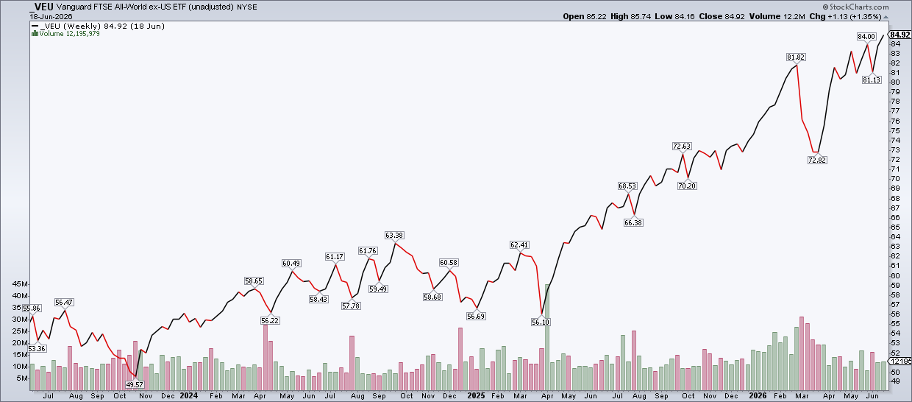
Last week, international equities posted a record weekly high. The Vanguard FTSE All‑World ex‑US ETF (VEU) outperformed the total‑U.S. market ETF (VTI), helped by strong South Korean and Taiwanese stocks and the AI trade.
Bias Toward U.S. Equities
In the long run, a five‑point rise in the dollar will likely dominate. Think of it as a big ship pushing through a narrow channel. With that force, holding more U.S. stocks makes sense.
The stronger dollar could also push short‑term rates higher and flatten the yield curve, which may pressure banks, homebuilders, and REITs.
Homebuilders Show Strength
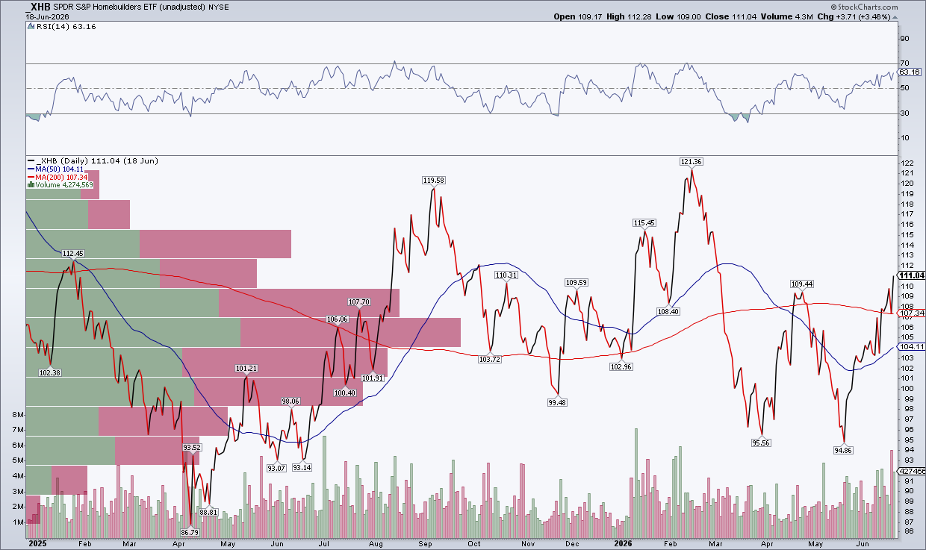
Among rate‑sensitive groups, the SPDR S&P Homebuilders ETF (XHB) hit a three‑month high last Thursday, despite still‑high mortgage rates. The basket of U.S. homebuilders showed solid relative strength.
Regional banks have a constructive outlook, while the Real Estate Select Sector SPDR Fund (XLRE) fell after the FOMC meeting.
Commodities Feel the Pressure
Precious metals have struggled as the dollar reached year‑to‑date highs. Gold stays below its long‑term average and is down for the year. Silver is also weak, though some buyers found dips near $60. Copper remains near its record high, reflecting growth expectations.
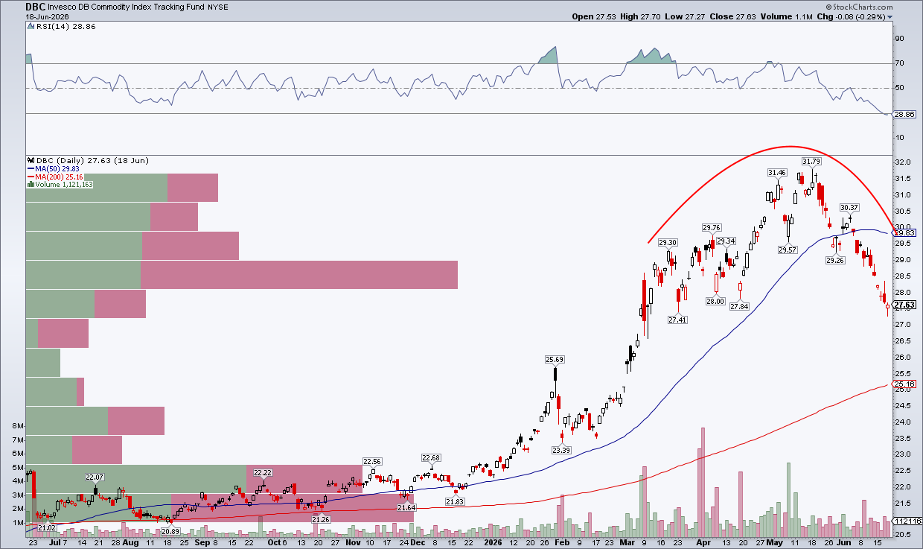
The Invesco DB Commodity Index Tracking Fund (DBC) shows its weakest momentum since April 2025, and a strong dollar could add to its current 13% loss.
Looking Ahead
The dollar breakout isn’t the only driver of market moves, but it will likely guide subtle trends over the next few months. The 100.60 level should now act as support.
One possible scenario mirrors the 1990s, where a strong dollar co‑existed with tech‑driven growth. If jobs stay tight and corporate profits stay solid, the Fed may keep rates higher for longer.
Bottom Line
For now, a stronger dollar appears more bullish for U.S. stocks than bearish. Rate‑sensitive areas are holding up, while sectors that usually suffer when the dollar rises are doing better. As with Treasury yields, both the direction and speed of the dollar matter for risk assets.
Disclaimer: This article is for educational purposes only and does not constitute financial advice.
Source: Materials provided by https://articles.stockcharts.com.Note: Content may be edited for style and length.