


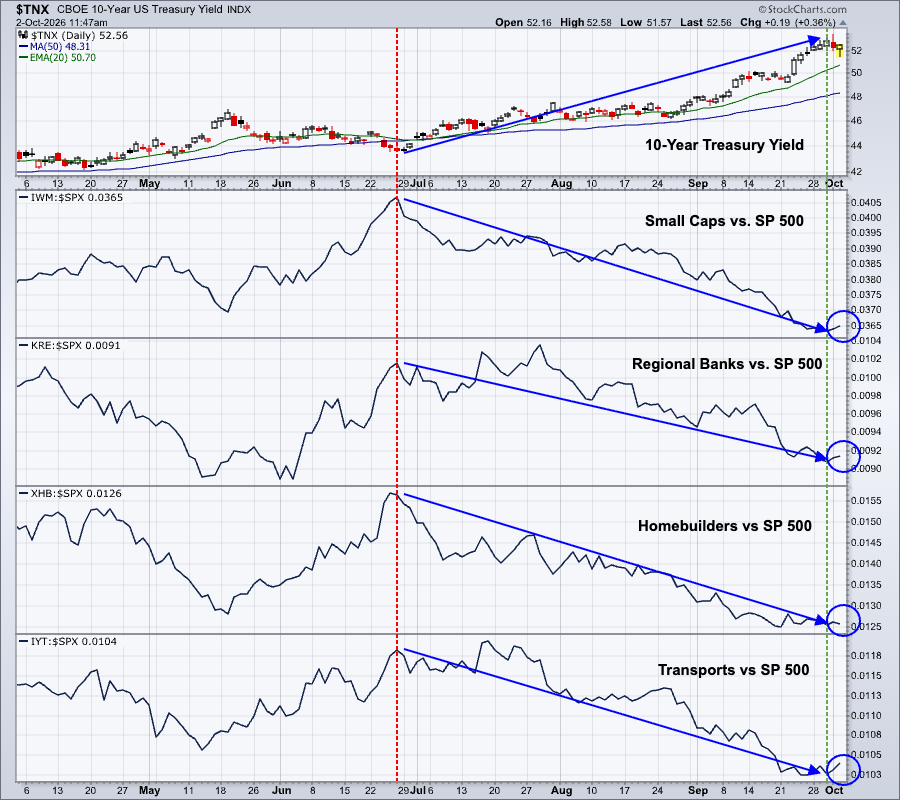
The 10‑year Treasury yield finally moved past 5%. That number tells us how much the government pays to borrow money for ten years.
When the yield goes up, borrowing becomes more expensive. Companies that need cheap money feel the pressure first.
What Happens to Stocks?
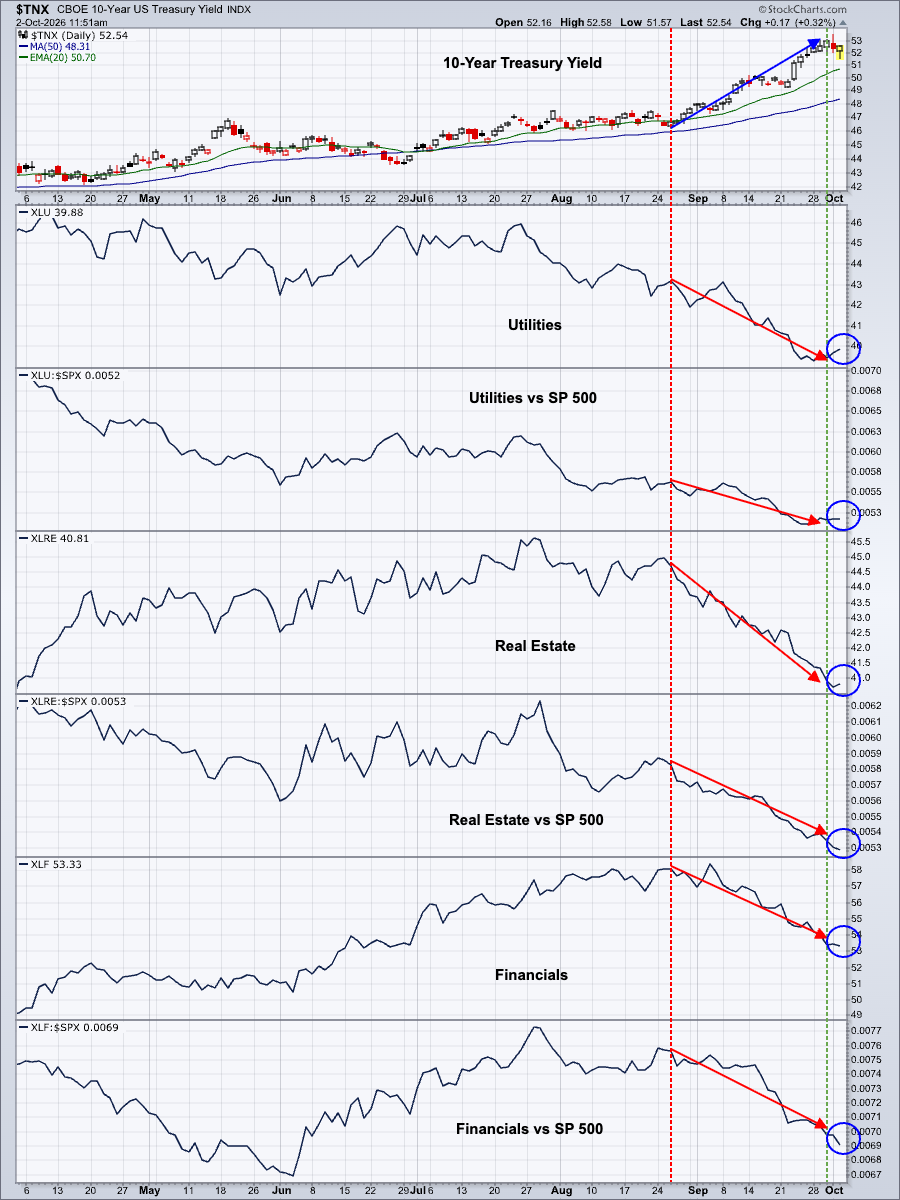
Higher yields did not push investors out of the stock market. Instead, they moved money from parts of the market that are very sensitive to rates.
Things like utilities, real estate, and some financial firms saw their prices drop because they rely on low‑cost borrowing.
In August, many expected the Federal Reserve to pause its rate hikes. When the Fed hinted it might raise rates again, bond prices fell and yields rose.
The market reacted by rotating—money left the most affected sectors and went toward those that can handle higher rates better.
Why This Matters
Even though rates are higher, the overall stock market can still climb. History shows that rising Treasury yields often accompany stock gains, but the winners shift.
Watch how different sectors perform and keep an eye on the yield level. That will give clues about where money might move next.
Source: Materials provided by https://articles.stockcharts.com.Note: Content may be edited for style and length.