
Usually, analysts study bonds first, then stocks, then commodities. This year the pattern broke when oil prices rose fast and pushed other markets around.
Even with oil over $100 a barrel, stocks stayed strong. Now the worry is that higher bond yields could pull stocks down, reminding many of the 2022 sell‑off.
Rising Rates Everywhere
All eyes were on Japan’s long‑term bond early this week. It hit 4.20%, the highest in 28 years. U.S. stock futures fell as the world’s biggest funding market showed strain.
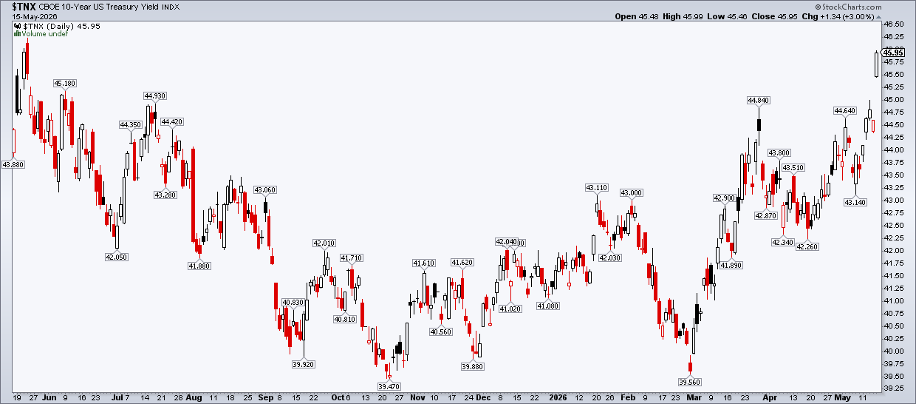
It helps to watch the U.S. 10‑year Treasury yield (ticker $TNX). Many traders believe this rate will guide the market’s direction for the rest of the year.
From AI Fears to Oil Shock
Just three months ago the 10‑year yield was below 4%. Concerns about AI slowing the job market and hurting company profits kept investors nervous.
Then, on Feb. 28, the U.S. and Israel struck Iran. Oil jumped from $70 to over $100 a barrel and bonds sold off. The 10‑year rate is now about 65 basis points higher, driven by the Middle‑East conflict and fiscal moves in places like Japan.
Even with that jump, today’s yields are similar to where they were a year ago, when bond investors were already warning about higher rates.
What the 30‑Year Yield Might Do
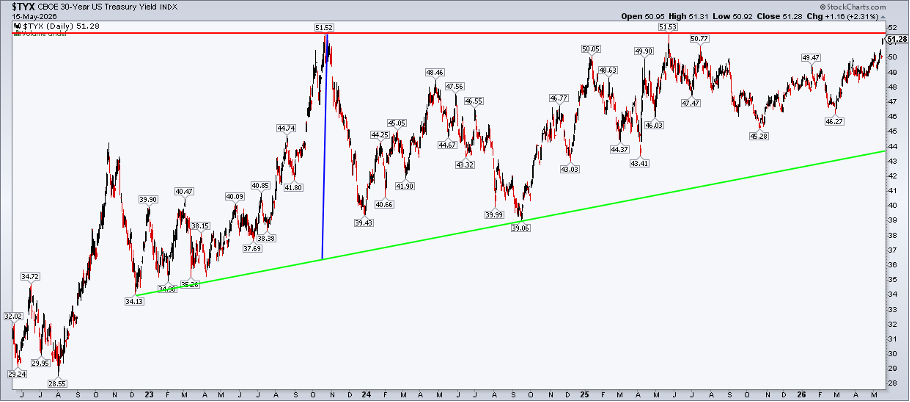
The 30‑year Treasury yield ($TYX) could finally be waking up. Since mid‑2023 it has made higher lows, and resistance now sits around 5.1%–5.2%.
If the pattern continues, the yield could break out toward about 6.4%.
How Bond Moves Affect ETFs
The iShares Core US Aggregate Bond ETF (AGG) has a modified duration of 5.9 years. If rates rose 1% instantly, the fund’s price would drop about 5.9%.
Holding it for a year, you would still get coupon payments, so the total loss would be roughly 1%—much milder than the big bond drops seen in 2020.
Why Stocks May Start Watching Bonds
When the 10‑year yield hits record highs, it can change the game for stocks, especially if the rise is fast. Traders care about the level, direction, and speed of yield changes, not just the number itself.
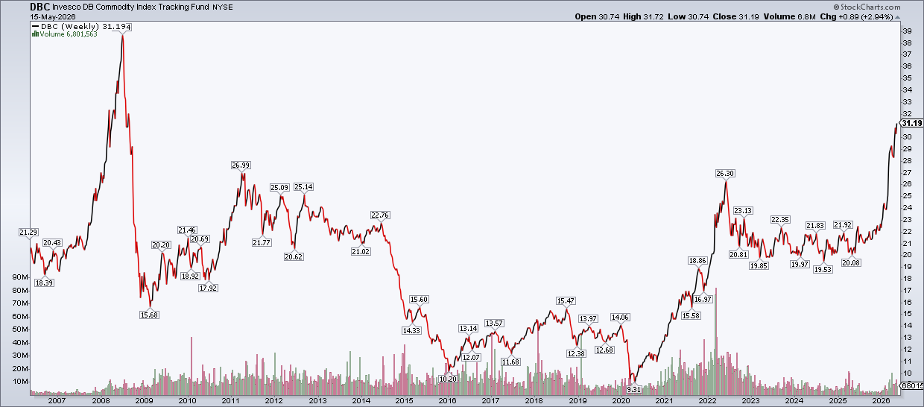
Commodities usually follow inflation signals. This year, oil has been the star, while gold and other metals fell behind. The Invesco DB Commodity Tracking Fund (DBC) recently hit its highest level since 2008.
Cycle Signals for the Economy
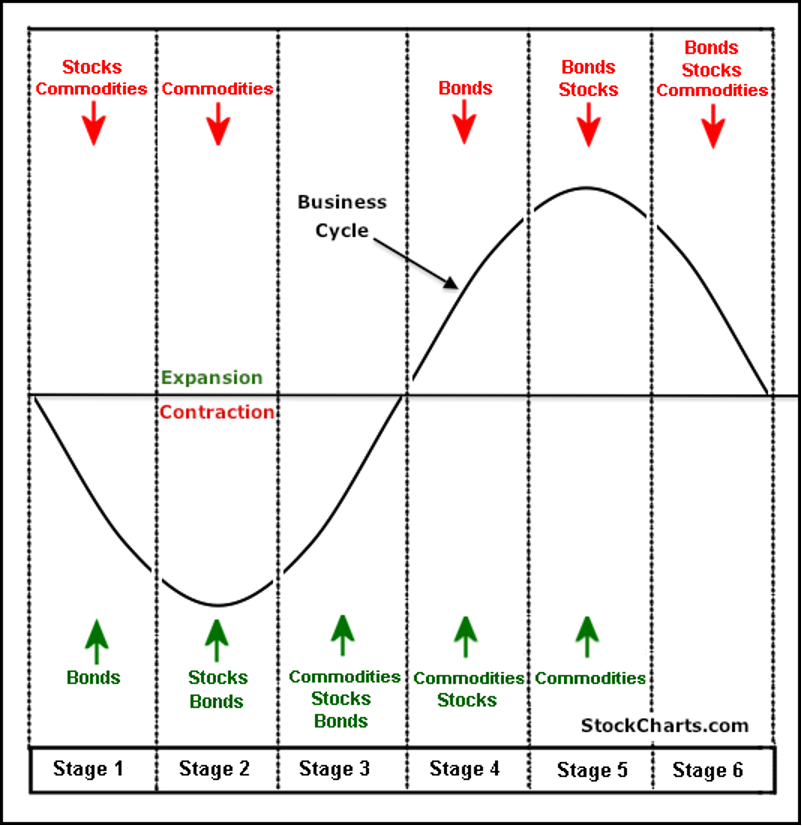
As Kevin Warsh prepares to take over from Jerome Powell at the Fed, the economy may be moving into a tougher phase of the business cycle. Bonds have been sold, commodities stay hot, and stocks are looking closely at Treasury yields.
Bottom Line
Understanding how bonds, stocks, and commodities interact is key this summer. Bonds have felt the pressure since February, stocks slipped after a recent S&P 500 high, and commodities keep setting new cycle records. Keep an eye on the 30‑year yield—it may guide the next moves.
Disclaimer: This article is for educational purposes only and does not constitute financial advice. Consult a professional before making any investment decisions.
Source: Materials provided by https://articles.stockcharts.com.Note: Content may be edited for style and length.