
Before we start…
You bought a cheap stock that fell hard. Later you bought a strong stock, but it also fell. Two different companies, same loss.
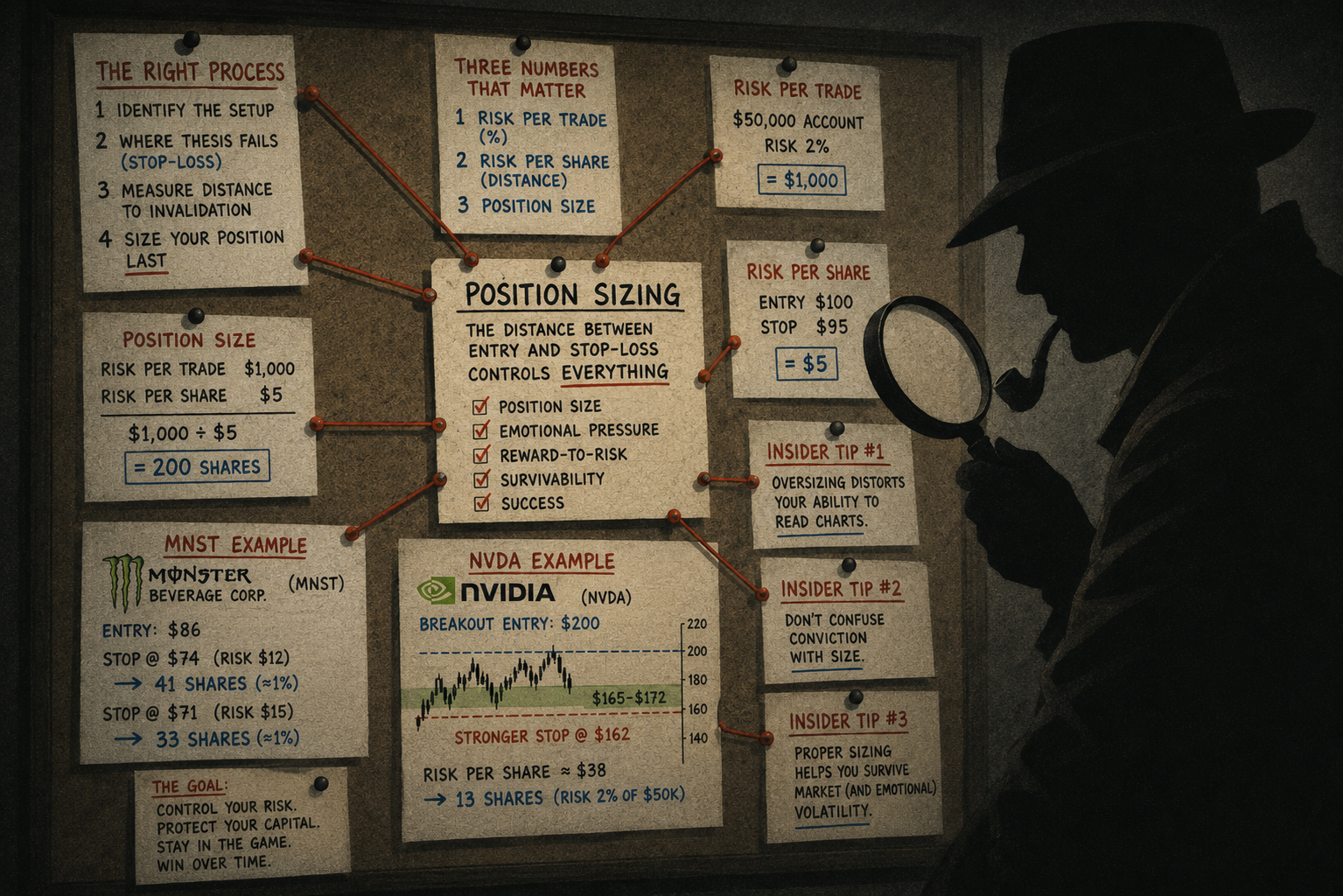
Many new traders count shares. Experienced traders count the distance between entry and stop‑loss. That distance decides how many shares to own – the true position size.
The real risk is the size, not the stock
Starting with a share count before you know the stop distance is a big mistake. It can make you lose a lot or win very little.
A safer way is:
- Find a good trade idea.
- Mark where the idea would be wrong – that is your stop‑loss.
- Measure the distance from entry to stop.
- Calculate the number of shares last.
The entry‑to‑stop distance tells you the right exposure.
Why charts matter more than the pick
A great company can still lose if you set a bad stop. Use the chart to see where price is likely to turn.
Look for:
- Swing lows and highs
- 200‑day simple moving average
- Previous breakout zones
- Average True Range (ATR)
- Price channels
- Ichimoku cloud limits
- Fibonacci levels
When the chart structure is clear, you can place a sensible stop.
Three numbers every trader needs
1 – Risk per trade
Decide what percent of your total capital you will lose on a single trade. For a $50,000 account, 2% means $1,000 maximum risk.
2 – Risk per share
This is the dollar gap between entry price and stop‑loss. If you buy at $100 and stop at $95, the risk per share is $5.
3 – Position size
Divide risk per trade by risk per share. $1,000 ÷ $5 = 200 shares. That is the most you can buy while staying within your risk limit.
Example with Monster Beverage (MNST):
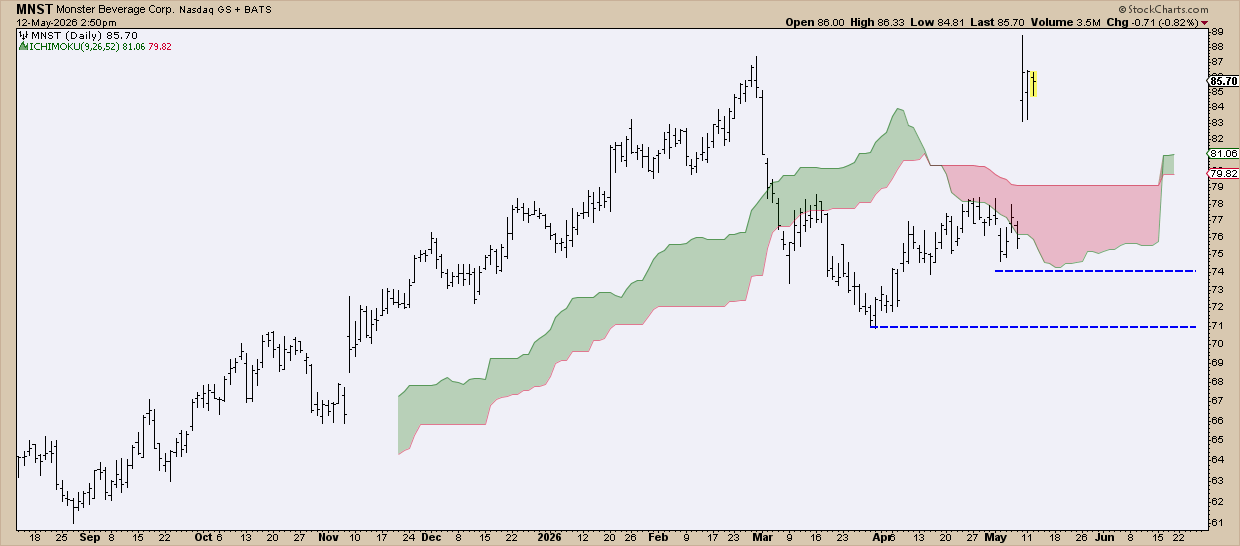
With $50,000 and a 1% risk ($500):
- Stop at $74 → $12 risk per share → 41 shares.
- Stop at $71 → $15 risk per share → 33 shares.
Either way, a loss stays near $500.
Volatility changes everything
Different markets move differently. The Russell 2000 e‑mini is shakier than the S&P 500 e‑mini. Too tight a stop will get you out too soon.
Look at NVIDIA (NVDA) as an example:
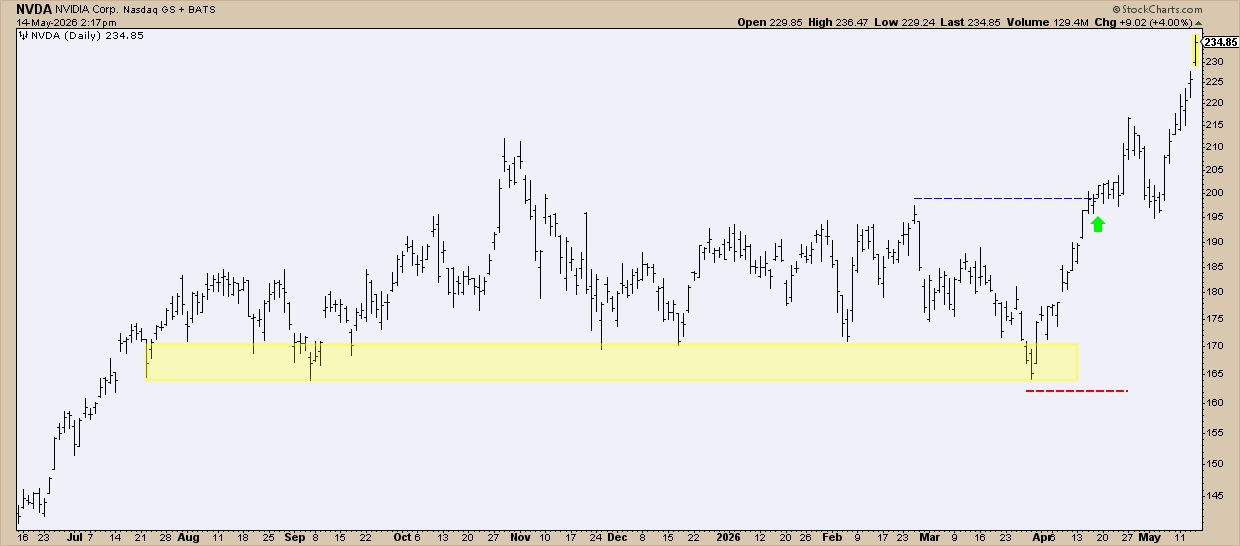
If you bought a breakout at $200, a stop around $162 is safer, even though it’s a wide $38 gap. With a $1,000 risk (2% of $50k), you can only buy 13 shares.
Insider Tip #1: Oversized positions cloud chart analysis and raise fear. Keep size realistic.
Insider Tip #2: Big conviction does not mean big risk. Use a risk framework for any size.
Insider Tip #3: Proper sizing absorbs emotional swings. Adjust the position, not the stop.
Wrap‑up
The distance between entry and stop‑loss silently controls position size, emotions, reward‑to‑risk ratios, and overall survivability. It can be more important than the stock you choose. Master the distance, and you master the trade.
Source: Materials provided by https://articles.stockcharts.com.Note: Content may be edited for style and length.