

The market has been climbing fast, and chip companies are pulling the big indexes up. When the S&P 500 jumps 16% in just five weeks, many traders feel they can’t miss out.
But chasing stocks that have already shot up a lot is risky. Smart traders look for stocks that are just beginning to rise, not those that have already peaked.
Right now, Oracle (ORCL) shows a clear early‑stage breakout pattern.
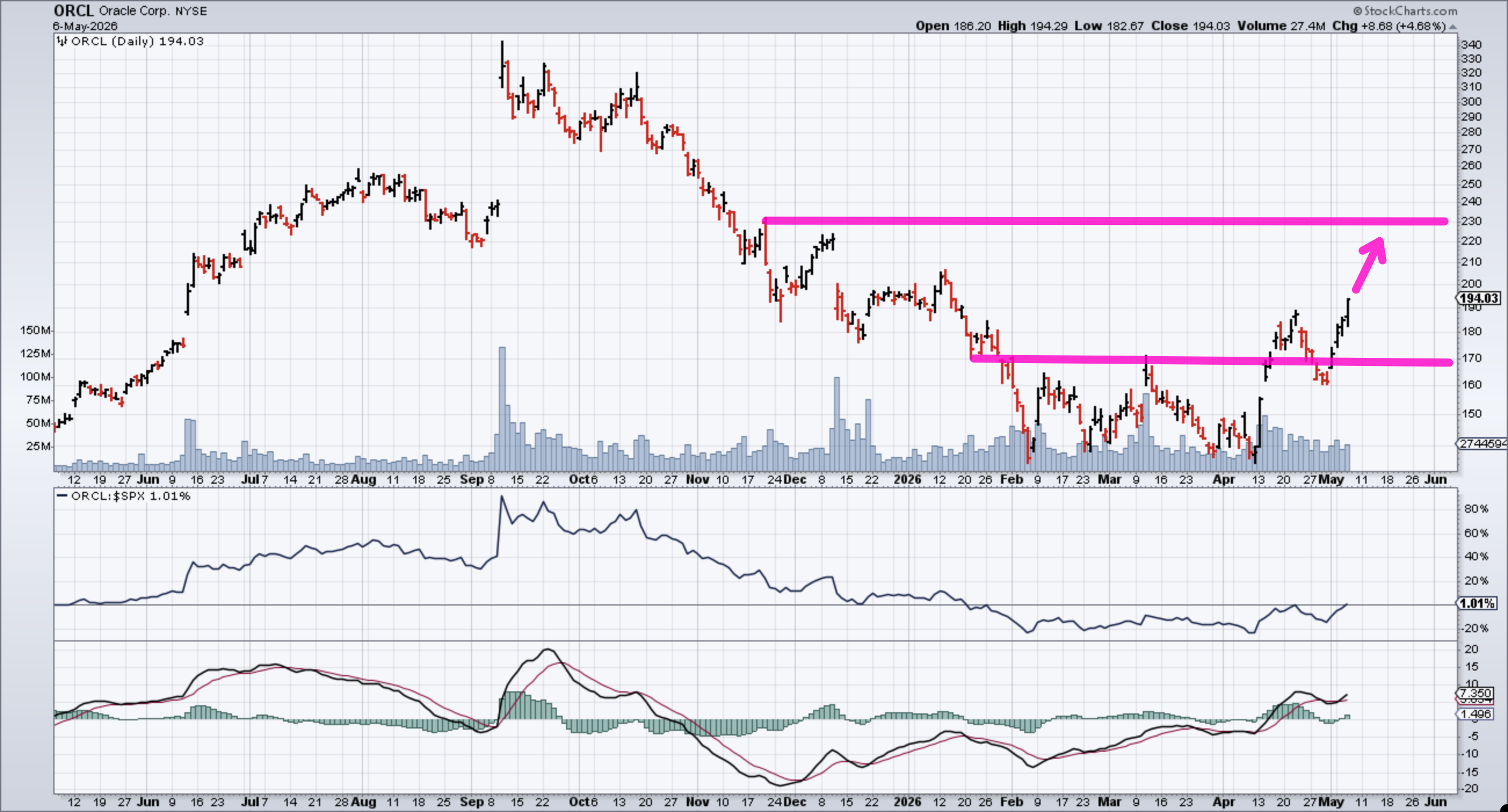
The chart shows Oracle building a solid base, breaking cleanly above the $170 resistance level, retesting that level as support, and now aiming for $230.
Because the market is stretched, buying plain call options would be too expensive. Instead, we built a capital‑efficient Bull Call Spread that captures the upside while limiting loss.
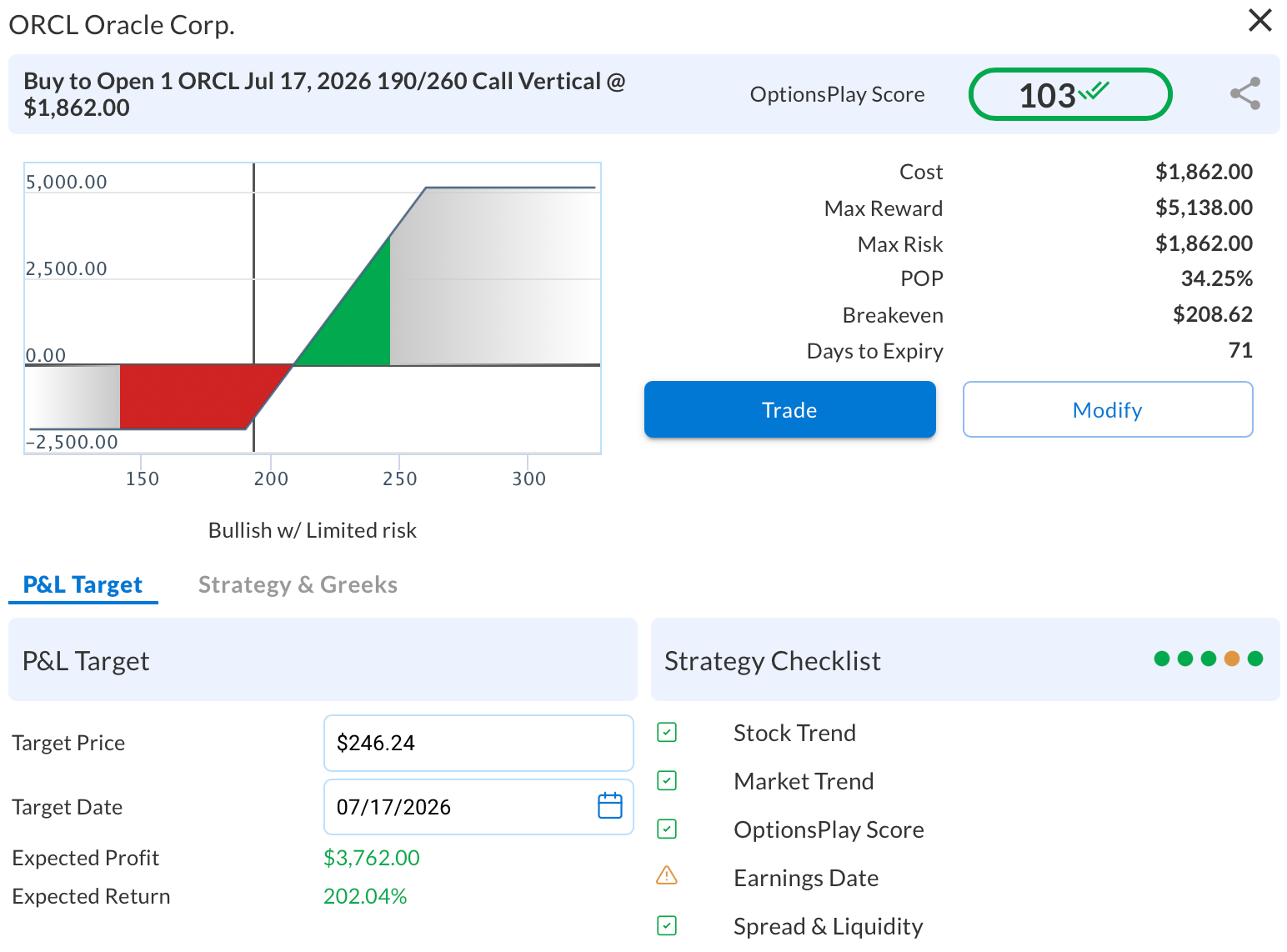
ORCL Trade Details:
- Strategy: Bull Call Spread
- Expiry: July 17, 2026 (71 days)
- Strikes: Buy $190 Call / Sell $260 Call
- Max Risk: $1,862 per contract
- Max Reward: $5,138 per contract
- Score: 104
We risk $1,862 to possibly earn more than $5,100 – a strong risk‑to‑reward ratio for a stock that is just starting its move.
How We Found It (Avoiding the Frustration Trap)
Finding a trade like this by hand can waste a lot of time. When markets surge, the hardest part is weeding out the bad ideas without getting tired.
Typical traders might scan for breakouts, open many charts, and spend minutes on each stock, only to discover the best moves have already happened.
That wasted time drains mental energy. When you’re exhausted, you may jump into a bad trade just to avoid feeling left out.
Our quick workflow finds the Oracle trade in under a minute, keeping your mind fresh.
Step 1 – Idea Generation (The Screener)
Instead of guessing which stocks are rising, we opened the scanner and ran a “Bullish Outperformance” scan. The tool instantly highlighted stocks making new highs compared to the market.
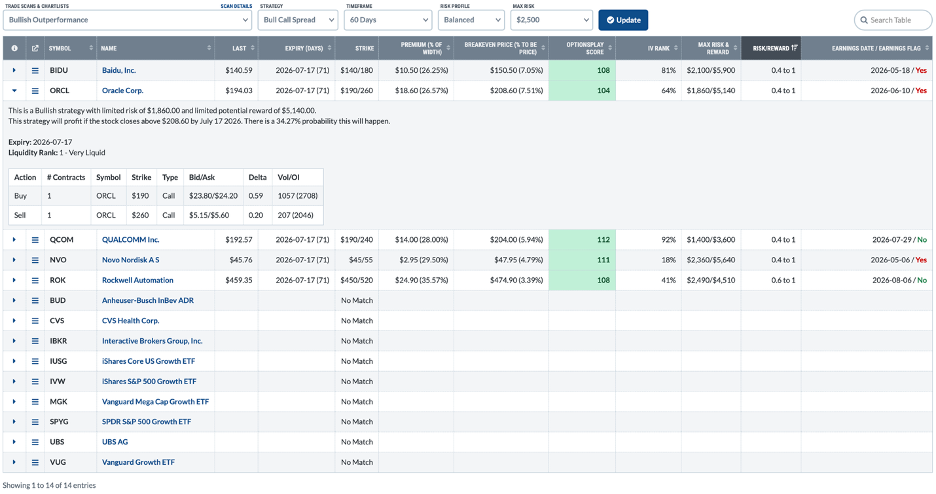
The scan reduced thousands of symbols to just 14 promising names.
Step 2 – Choose a Strategy
With the market up 16% in five weeks, a pullback is possible. We wanted upside exposure but limited risk, so we filtered for “Bull Call Spreads.”
Step 3 – Automated Execution
The scanner calculated the Greeks for all 14 stocks, ranked them by the best risk‑to‑reward, and gave us the optimal strike prices.
The top name, Baidu, had already moved after earnings, so we moved to the next pick – Oracle. The tool showed that a $190/$260 spread was the most efficient way to target $230.
In less than a minute we avoided FOMO, skipped the earnings trap, and locked in a clear trade.
This process can be repeated for many stocks every day.
The scanner works with any watchlist, offers six built‑in technical scans, and supports nine different options strategies – from simple calls to advanced credit spreads.
What used to take hours of charting, research, and math is now done in seconds.
Stop hunting manually. Let a workflow do the heavy lifting for you.
Source: Materials provided by https://articles.stockcharts.com.Note: Content may be edited for style and length.