

How people feel about the market is often ignored, except maybe for their point of view.
If optimism gets too high, gains often stall. If pessimism gets too low, it may be a chance to buy. By watching the Cboe Options Equity Put/Call Ratio, called $CPCE, you can improve your investing results.
The chart below is part of a weekly market update shared with a group of investors. You don’t need to check it every week, but it helps you see how sentiment moves.
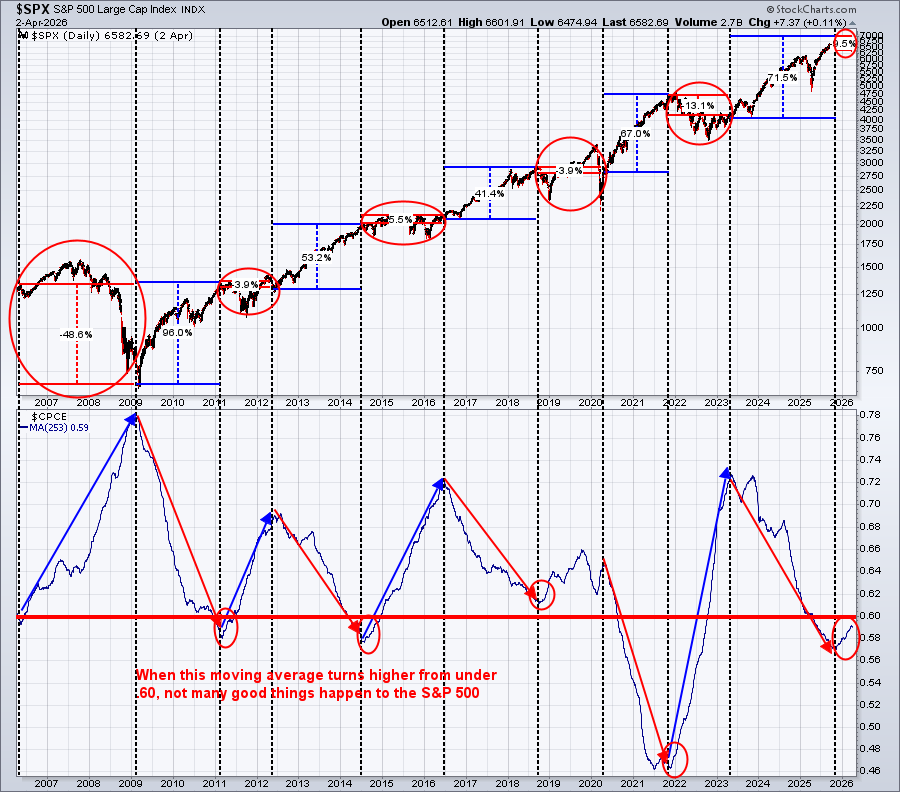
When the 253‑day average of the CPCE falls to 0.60 or lower, the market may face headwinds. This low level shows that many small traders are buying too many bullish options, which often ends badly. When the average climbs above 0.70, it means traders are very bearish, and the S&P 500 often jumps higher for a while.
Right now, the 253‑day average just hit 0.57 and is climbing. This signal often predicts a period of higher volatility and choppy moves. It can be hard to trust either up or down trends, making 2026 a tough year for traders who chase quick gains.
I think the rest of 2026 will reward careful stock pickers. Take profits after a good trade and keep cash ready for the next chance. I plan to add more index ETFs when the market weakens, aiming for new highs later this year or next.
Predicting market tops and bottoms is hard for most people. I have called several major turns correctly. In early 2022, I warned that the market was too optimistic after a big rise, using the CPCE as a warning sign. At that time, the S&P 500 had risen over 115% in less than two years, which was unsustainable. The CPCE showed extreme complacency, and the market later corrected.
Sentiment and perspective can take you a long way in this business.
Seasonal patterns also give clues. Many stocks tend to perform well in April. Each Monday, I share an energy stock that has risen in 85% of Aprils over the past twenty years, gaining about 6% on average. It is currently near its 20‑day moving average, ready for another rise. This seasonal boost adds to the chance of success.
Happy trading!
Source: Materials provided by https://articles.stockcharts.com.Note: Content may be edited for style and length.