

Before we start…
Many traders think they need a better chart. In reality, they often need better attention or timing. Even a perfect chart won’t help if you have to stare at it all day. The market moves on its own, and you can’t keep up by clicking every few minutes.
That is why alerts exist. They are simple, but when you use them right, they can change how you trade and how many chances you catch.
The Core Idea: Alerts Give You Control
This article does not teach you how to set every alert. For detailed steps, see the Technical Alerts support page after reading.
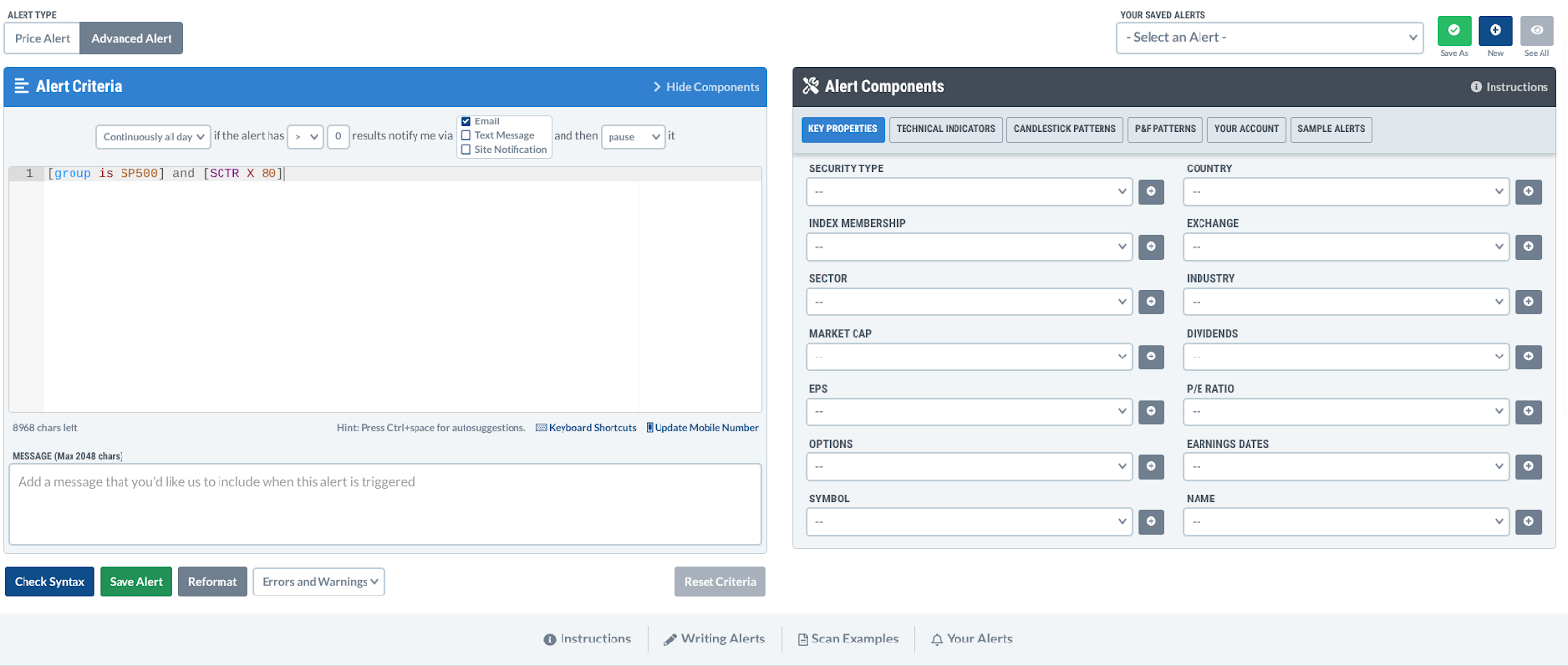
Alerts help you control three things:
- Time: No need to stare at charts all day.
- Attention: You focus only on what matters.
- Execution: You act only when all your rules are met.
Let’s look at why alerts are useful.
12 Reasons to Use Alerts
1 – Stop Missing Strong Set‑ups
Breakouts, reversals, and indicator triggers happen when you’re away. Missing a single trade can change a day’s profit, especially if the trade would have been big. Alerts scan the market for you, so you don’t waste hours watching charts.
2 – Save Hours of Watching
Imagine watching the market three hours a day for 40 years. That’s over 10,000 days – the same as working eight full years just looking at charts. Alerts do the watching for you, freeing up that time.
3 – Pull the Trigger Only When Rules Are Met
Instead of guessing, set an alert that tells you exactly when a condition is true. If the alert rings, you trade. If not, you stay out.
4 – Build Discipline Automatically
Following alerts trains you to avoid impulse trades, headline reactions, or random chases. Your system runs, and you stick to it.
5 – Take the Mental Load Off
Modern life is busy. Alerts keep your checklist in the computer, not in your head. No more forgotten setups or scattered focus.
6 – Let Your Strategy Work While You Rest
Alerts are not full automation, but they let you see opportunities even when you’re offline. You keep control over the actual trade.
7 – Complete Your Trading Workflow
Many traders stop at charts and scans. A full workflow looks like:
- Charts → Scans → Alerts → Action
This extra step turns a good process into a great one.
8 – Separate Signal From Noise
Alerts help you focus on true signals and ignore irrelevant data. When you only hear the signal, you gain a speed edge and a broader view.
9 – Watch More of the Market
With alerts you can monitor whole sectors, large watchlists, or several asset classes at once. Your chance pool gets bigger.
10 – React Faster to Changes
Key breakouts and momentum moves happen quickly. Alerts shrink the gap between seeing a signal and acting on it.
11 – Use Alerts for Research
Track how often a signal appears and what happens after it fires. Turn alerts into a live experiment that teaches you what works and what doesn’t.
12 – Catch What Scans Miss in Real Time
Scans show you a list at a moment in time. Alerts keep watching continuously and tell you the exact second something happens.
Two Insider Tips
Tip #1 – Alert on Transitions, Not Just Conditions
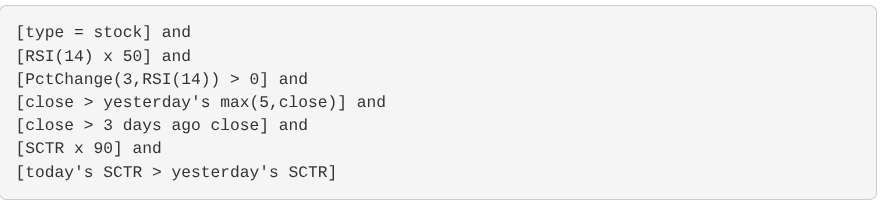
Instead of an alert that says “RSI > 50,” set one that says “RSI crosses above 50 and is higher than three days ago.” Adding the change gives you an extra edge.
Tip #2 – Turn Alerts into a Discovery Engine
Don’t limit alerts to single symbols. Set them for whole markets or sectors. For example, alert when any US stock’s RSI crosses above 50 AND its SCTR crosses above 75. This helps you discover new opportunities you might never have looked at.

Wrap‑Up
Alerts make your trading process faster, more disciplined, and scalable. They let the market come to you, giving you extra time for other work or for deeper market study. Try setting a few alerts today and see the difference for yourself.
Source: Materials provided by https://articles.stockcharts.com.Note: Content may be edited for style and length.