


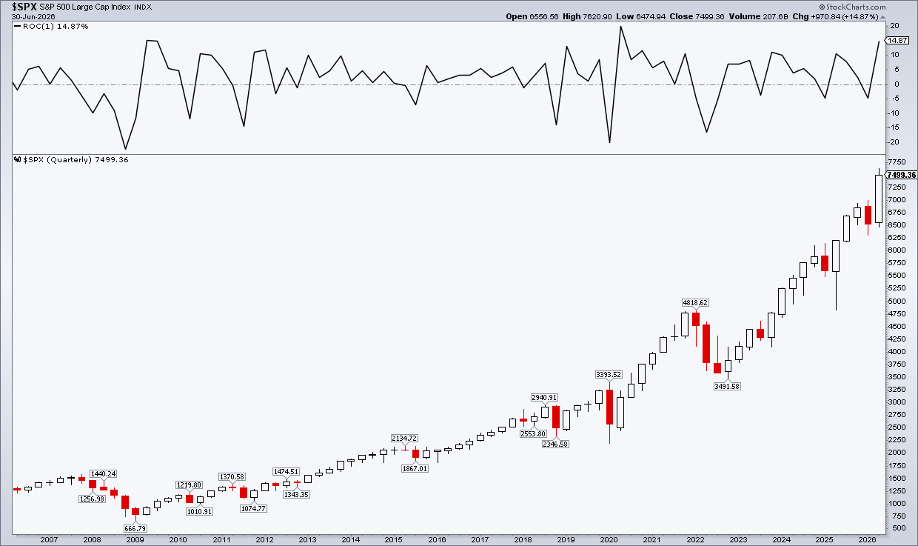
The S&P 500 finished June with a 2.0% gain, adding about 205 points since the low on Friday. The market is now moving into the second half of the year, but it is still a bit shaky.
Stocks have not made a big push upward for several weeks. Still, major indexes like the Dow, Mid‑Cap 400, Small‑Cap 600 and the Russell 2000 are all climbing into new territory.
Outside the U.S., the Vanguard FTSE All‑World ex‑US ETF (VEU) rose 12.0% in the quarter, helped by a 21% jump in the iShares MSCI Emerging Markets ETF (EEM). Oil, gold and Bitcoin all fell during June and the whole second quarter. The U.S. dollar also nudged higher, breaking the 100.60 level on the Dollar Index.
The bond market got far less attention. The 10‑year Treasury yield slipped 3.5 basis points in June, and the iShares Core U.S. Aggregate Bond ETF (AGG) posted a small gain for the third month in a row.
At a big‑picture level, it looks like the Federal Reserve and the Treasury are working together to keep long‑term rates steady. Even though the Fed’s new chair has only been in office for two months, long‑term yields are starting to calm down. The question now is whether any trouble is hiding in the fixed‑income world as July begins.
Subtle Shifts in Credit
Every day I look at the market summary on StockCharts. In the bond section there is a “Fixed Income/Credit Spreads” tab that shows a clean chart. At the end of June the chart showed a modest but clear rise in both high‑yield and investment‑grade credit spreads.
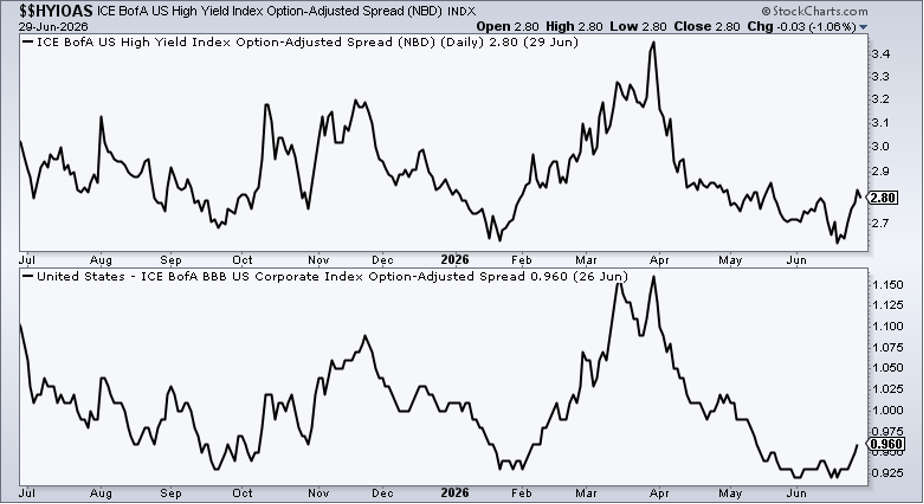
A spread of 280 basis points on the ICE BofA High‑Yield Index and 96 basis points on the ICE BofA BBB Corporate Index is not alarming by itself. What matters is that the spreads are starting to move up while stocks stay high. This could be a warning sign.
In the second half of 2026, credit will become more important. Companies are raising a lot of money – both debt and equity – and the spread between bond yields and Treasury yields may show risks that stock prices hide. Tech firms and other companies building AI are now a bigger part of the high‑yield and investment‑grade bond markets than they were a few years ago.
We’ve Seen This Before
Look back at the spread rises in late January and early February. The S&P 500 did not peak before the Iran conflict; instead it formed a rounded top while the MSCI ACWI ETF kept climbing. The widening spreads then warned of a shift from bullish to bearish sentiment.
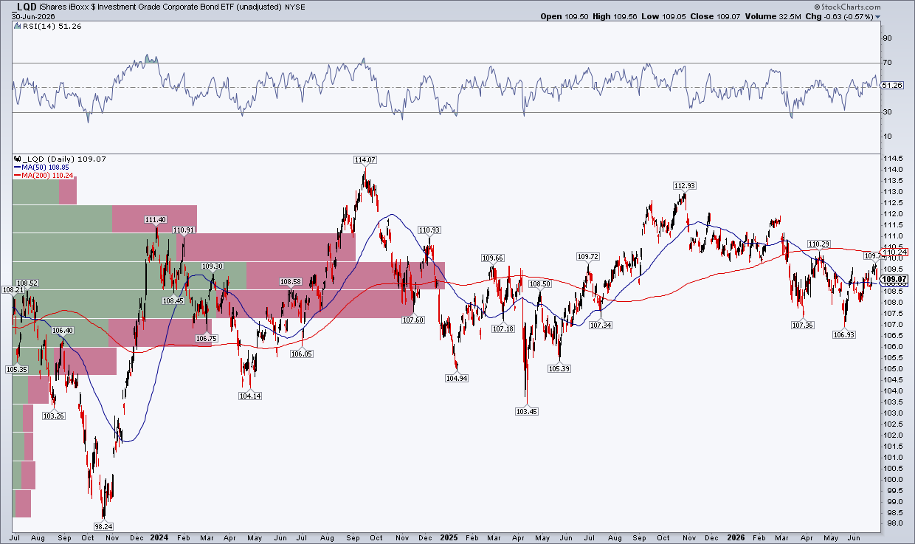
Today the spreads are very tight, meaning they can’t go much lower. The iShares iBoxx High‑Yield Corporate Bond ETF (HYG) is roughly where it was at the end of 2024, and the iShares iBoxx Investment‑Grade Corporate Bond ETF (LQD) is also flat compared with late 2024.
Because the spreads have little room to shrink, even a small increase could become an early signal.
What to Expect in July
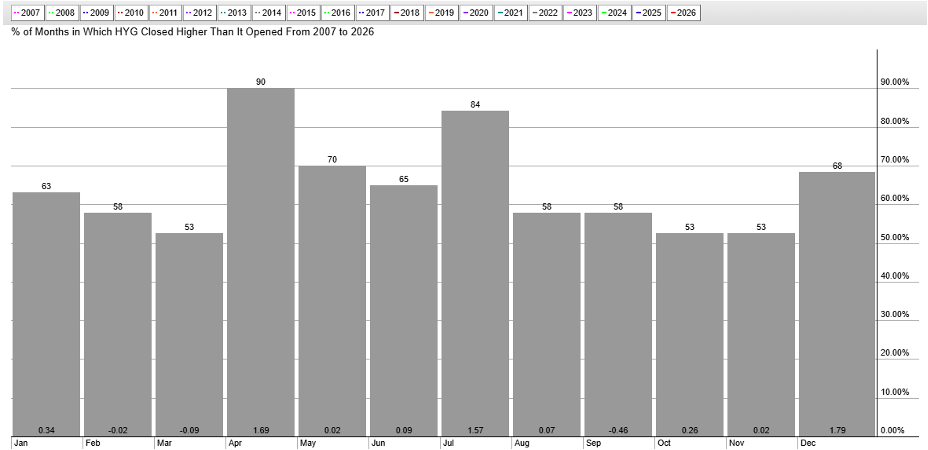
History suggests that the first half of July will not see dramatic jumps in high‑yield or investment‑grade spreads. So far, the earnings season has helped both stocks and credit. As we move deeper into Q3, keep an eye on any yellow flags in the market.
Checking the market summary page each day can help you see subtle changes before they become headlines on social media.
In the very short term, bond volatility could rise after the June jobs report. A strong hiring number and higher hourly wages might shake bonds, but good data usually narrows credit spreads. I will keep watching and share updates.
Bottom Line
There are no big fireworks in the corporate bond market yet. High‑yield and investment‑grade spreads are still low, but they have started to creep upward as stocks wobble. With more debt and equity being raised for AI projects, investors will likely pay closer attention to these spreads in the second half of 2026. For now, the small moves do not call for major changes to a portfolio.
Disclaimer: This article is for educational purposes only and does not constitute financial advice. Always consider your personal situation and consult a professional before making investment decisions.
Source: Materials provided by https://articles.stockcharts.com.Note: Content may be edited for style and length.