

"Forget the original plan. From now on we are making a new mission," said Flight Director Gene Kranz after Apollo 13 suffered an explosion.
Just like the Apollo crew had to improvise, markets are also changing fast. A two‑week cease‑fire between the United States and Iran has turned the news cycle upside down.
A New Market Script
Instead of focusing on earnings, inflation data, or Fed speeches, traders are watching the headline: peace talks in the Middle East. The announcement sent global stocks sharply higher.
Risk‑On Takes Over
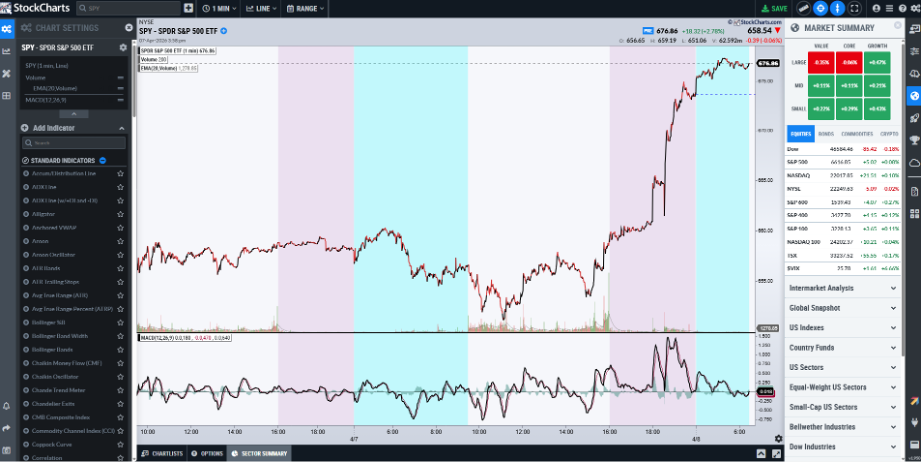
On the morning of April 8, the S&P 500 was up almost 3 % before the market opened. The biggest gains came from the most hurt areas: Asian country ETFs (EWY, EWT, EWJ, INDA), European ETF (VGK), U.S. small‑cap ETF (IWM), homebuilders (XHB), airlines (JETS), and even crypto and gold.
At the same time, oil fell about 12 %, energy stocks dropped, Treasury yields slipped, the dollar weakened, and the VIX (volatility index) fell toward 20.
South Korea Leads the Charge
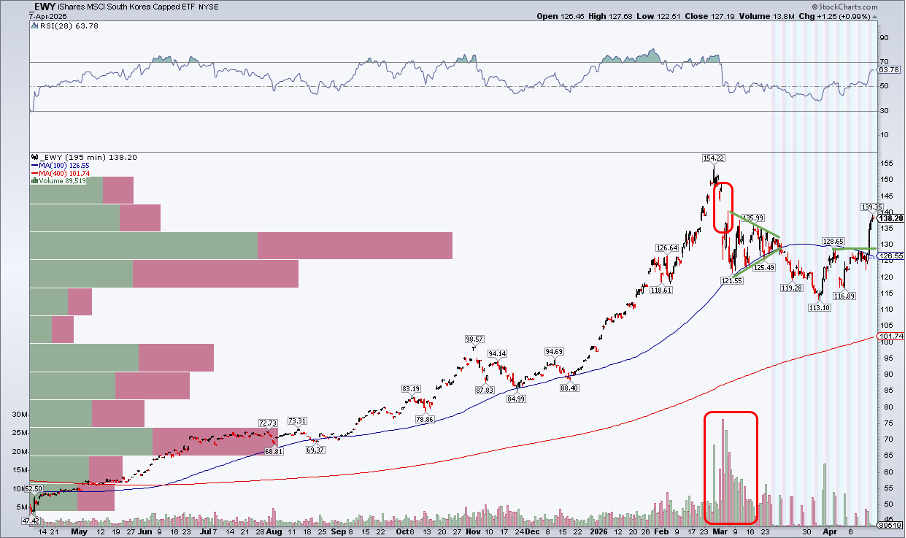
The iShares MSCI South Korea ETF (EWY) jumped almost 10 % before the market opened. It moved from a low of $113 to near $140 in one day.
The ETF is now above its 50‑day moving average, a level that previously caused selling. The all‑time high is only about 11 % away, and the old resistance at $129 now acts as support.
Similar moves are seen in Taiwan (EWT) and Japan (EWJ) ETFs.
Homebuilders Lag Behind
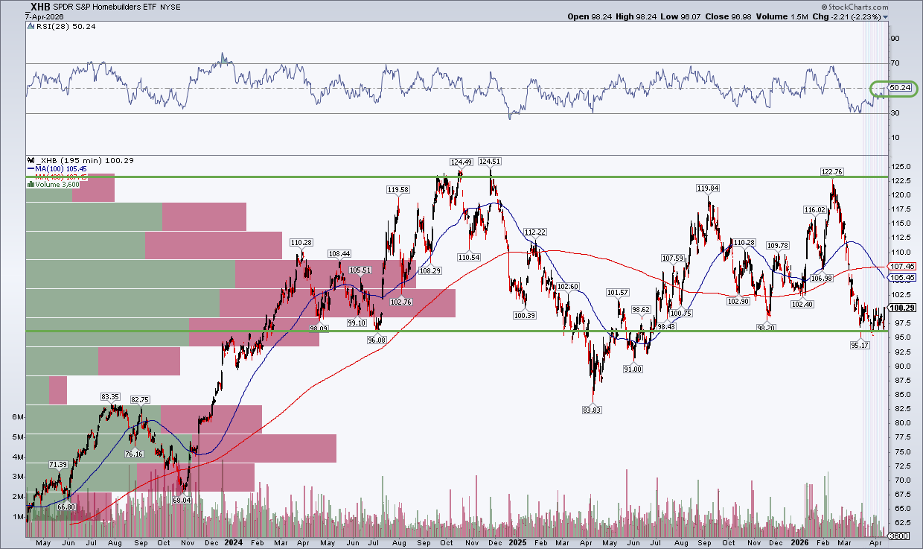
Higher oil prices and rising rates slowed the homebuilder rally. The SPDR S&P Homebuilders ETF (XHB) bounced a little in pre‑market trading but stayed below its 50‑day and 200‑day averages.
It is still about 20 % below its late‑2024 peak. However, the RSI momentum indicator just crossed the 50 line, which some traders view as a sign of possible upside.
Volatility May Be Cooling
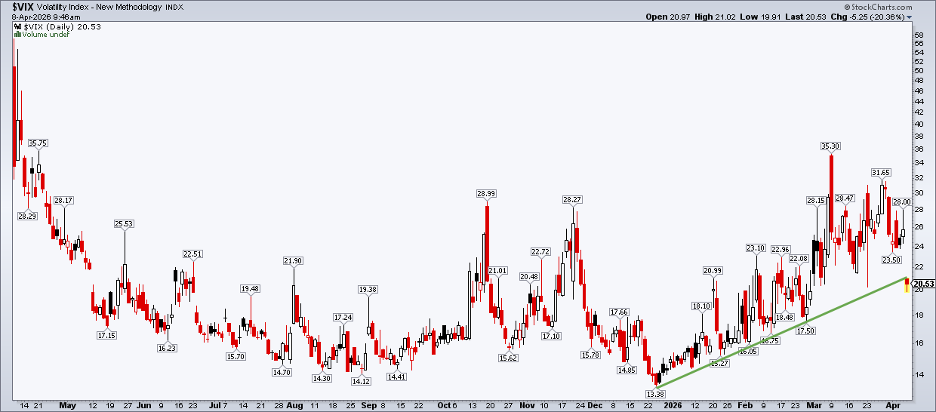
The CBOE Volatility Index (VIX) had been climbing since the end of 2025. After the cease‑fire, it broke that uptrend and fell to a new low near 20.
If the VIX can stay below 20 for a week, it could confirm a short‑term low‑volatility regime. April historically brings lower volatility and strong global stock returns.
What Comes Next?
The market rally started after the cease‑fire news. It is now ahead of key data like PCE inflation, March CPI, and the upcoming earnings season. JPMorgan Chase is set to report early next week.
The S&P 500 is back above its 200‑day moving average, the VIX is near 20, and many beaten‑down country ETFs have posted strong early gains. Traders will watch closely to see if the rally can keep moving upward.
Disclaimer: This content is for educational purposes only and does not constitute financial advice.
Source: Materials provided by https://articles.stockcharts.com.Note: Content may be edited for style and length.