
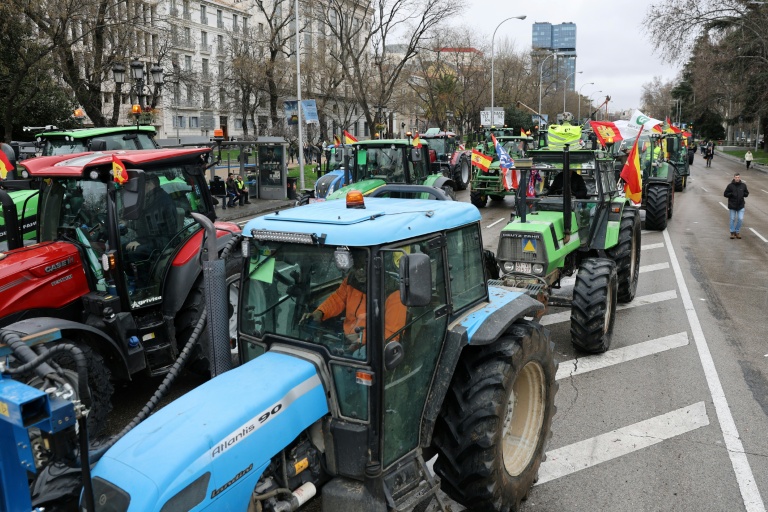
On a brisk Wednesday, more than 2,500 demonstrators and 367 tractors rolled through the streets of Madrid, voicing fierce opposition to the newly signed EU‑Mercosur free‑trade agreement. Farmers warned that the pact could spark “unfair competition” and undermine Spain’s food sovereignty.
Spain ranks among Europe’s agricultural powerhouses, alongside France, Germany, Italy and Poland, contributing roughly 2.5 % of the nation’s GDP. Yet the sector faces mounting pressure from global market shifts, climate challenges, and now, a trade deal that opens the EU market to Argentine, Brazilian, Paraguayan and Uruguayan products.
Banner slogans such as “No to Mercosur, no to ruin,” “Our countryside is not for sale,” and “The farms are dying” echoed through the crowd. Miguel Ángel Aguilera, president of the farm union Unaspi, stressed the stakes: “If agriculture collapses, every citizen feels the impact.”
Critics argue the agreement will flood European tables with lower‑priced imports, eroding quality standards and weakening domestic producers. “We risk losing food sovereignty; true competition will disappear,” Aguilera warned.
Spanish Prime Minister Pedro Sánchez, a strong proponent of the pact, hailed it as “excellent news” for the economy. He also pledged “compensation mechanisms” and “agricultural safeguard clauses” to protect the most vulnerable growers and to scrutinise Mercosur imports that could harm EU farmers.
Despite these assurances, Spanish agricultural groups remain skeptical. In a statement, they warned that the deal threatens “food sovereignty” and creates “serious imbalances” with third‑country competitors.
Opposition is not limited to Spain. On 21 January, the European Parliament asked the EU Court of Justice to review the agreement’s compatibility with EU law, a setback for Commission President Ursula von der Leyen, who championed the removal of tariffs on more than 90 % of bilateral trade.
The Court will now examine whether the accord, concluded after 25 years of negotiations in Paraguay, respects existing European treaties or requires adjustments.